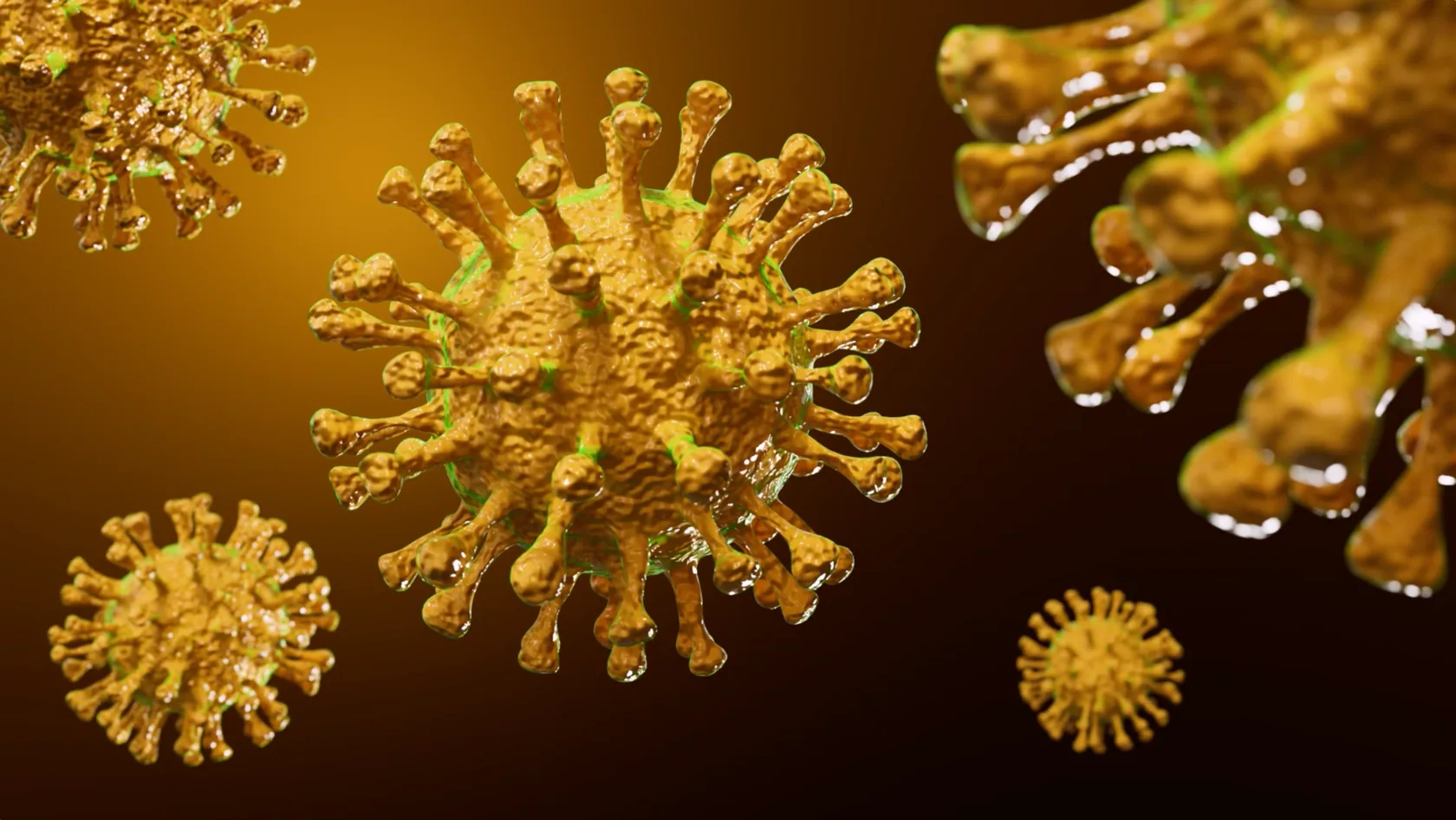
A ready-made animated scene with a detailed virus particle for scientific, medical and abstract visualization. The spherical body is covered with club-shaped protein spikes. The shape is recognizable at first glance and resembles a coronavirus without copying it literally, so the model stays versatile for any story about the microworld.
A warm amber palette, the wet gloss of the surface and a greenish halo along the outline make the particle feel alive and tangible rather than like a dry textbook diagram. The model works for health and pharma videos, educational content, presentations, intros and antiseptic ads, as well as macro compositions with a shallow depth of field where several particles float in the frame.
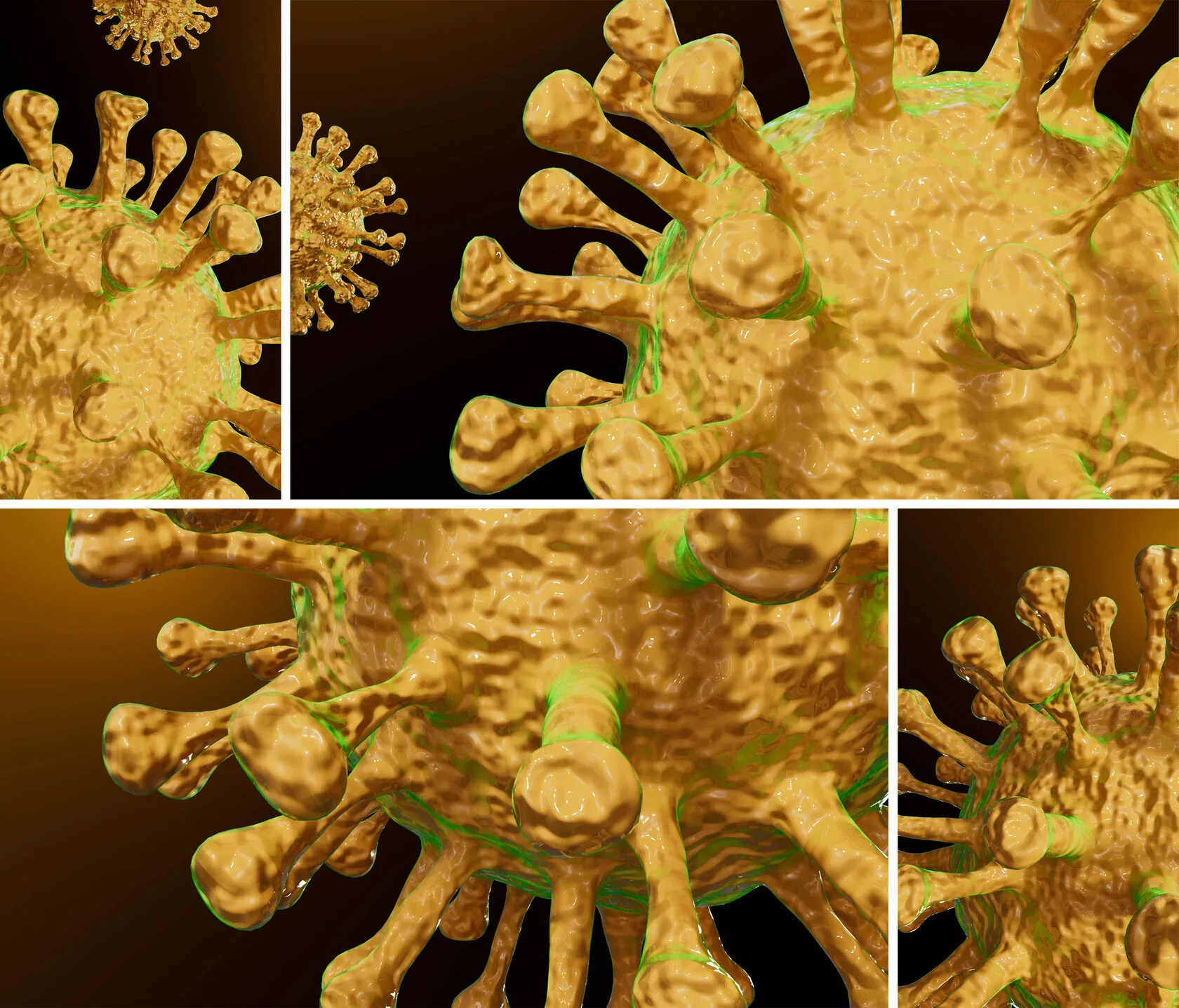
Close-ups show what the model was made for. The bumpy relief of the shell, the wet gloss and a thin greenish halo at the base of the spikes hold up even in macro shots where the particle fills the whole frame. The spikes with thickened heads grow smoothly out of the body: there are no seams or joints, so the surface looks whole from any angle, like a living organism.
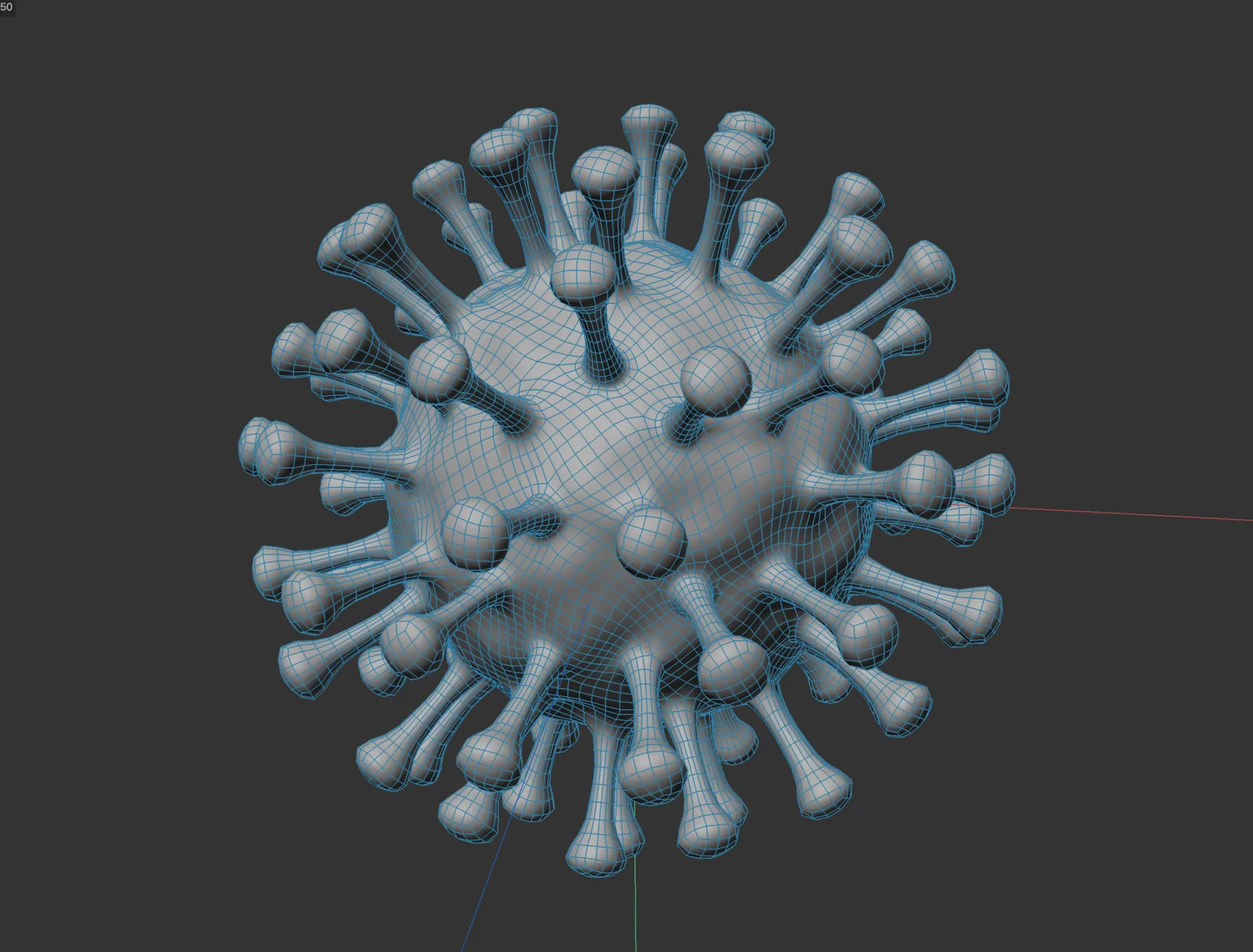
MODELING
The model is a single mesh with a clean quad topology of 19,455 polygons. Edge loops flow smoothly from the body to the stems and heads of the spikes, so the geometry subdivides cleanly, deforms well in animation and exports to other software without artifacts. The polycount leaves headroom: you can scatter dozens of copies in a scene without a heavy viewport, and the spikes keep their shape on close-ups.The shape is built from Cinema 4D generators, so you can change any part and the model rebuilds itself. The procedural project is not included in the main archive and is sold separately for 400 ₽ on Boosty
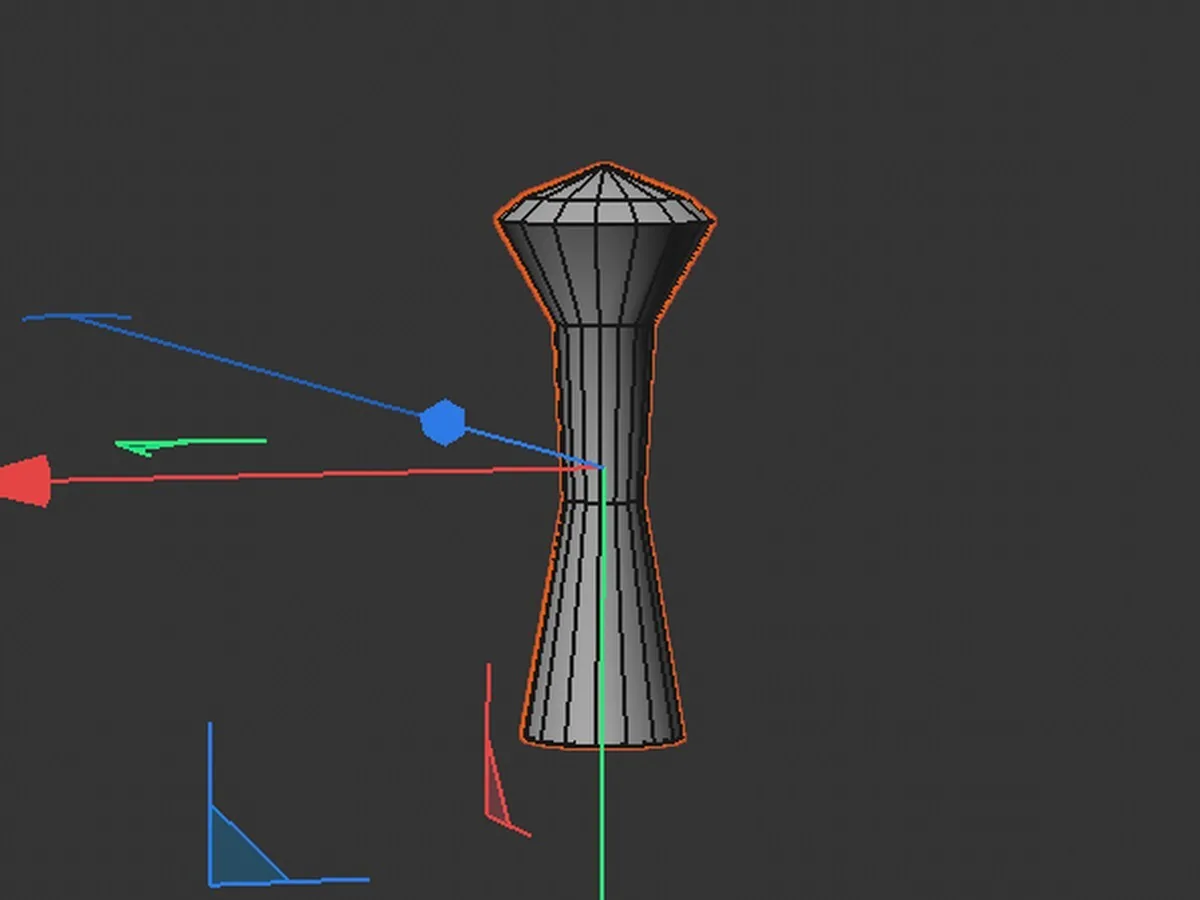
Spike. It all starts with a plain cylinder: it becomes one spike with a thickened tip.
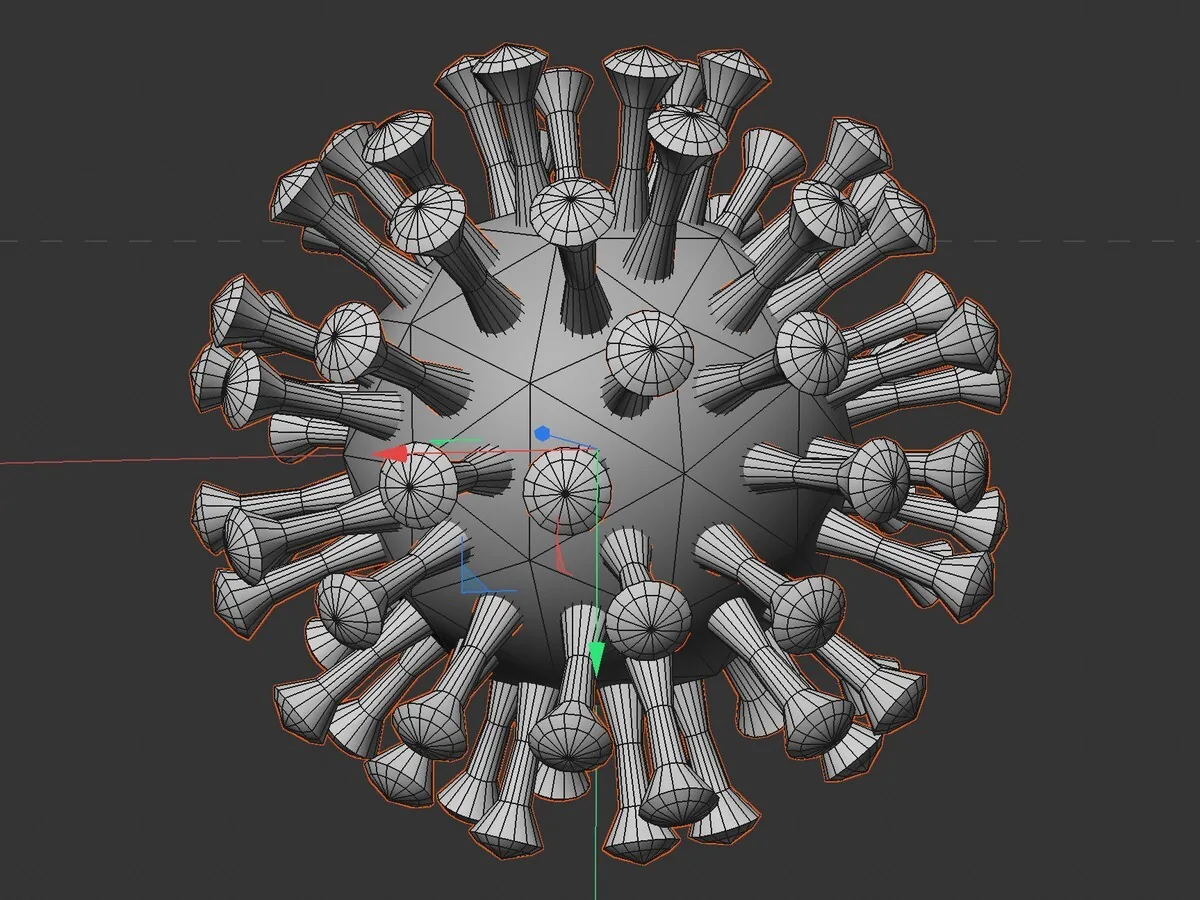
Spikes on a sphere. A Cloner places the spike on the polygon centers of a low-poly sphere. A Random effector rotates and scales the spikes unevenly so they don’t stand in neat rows.
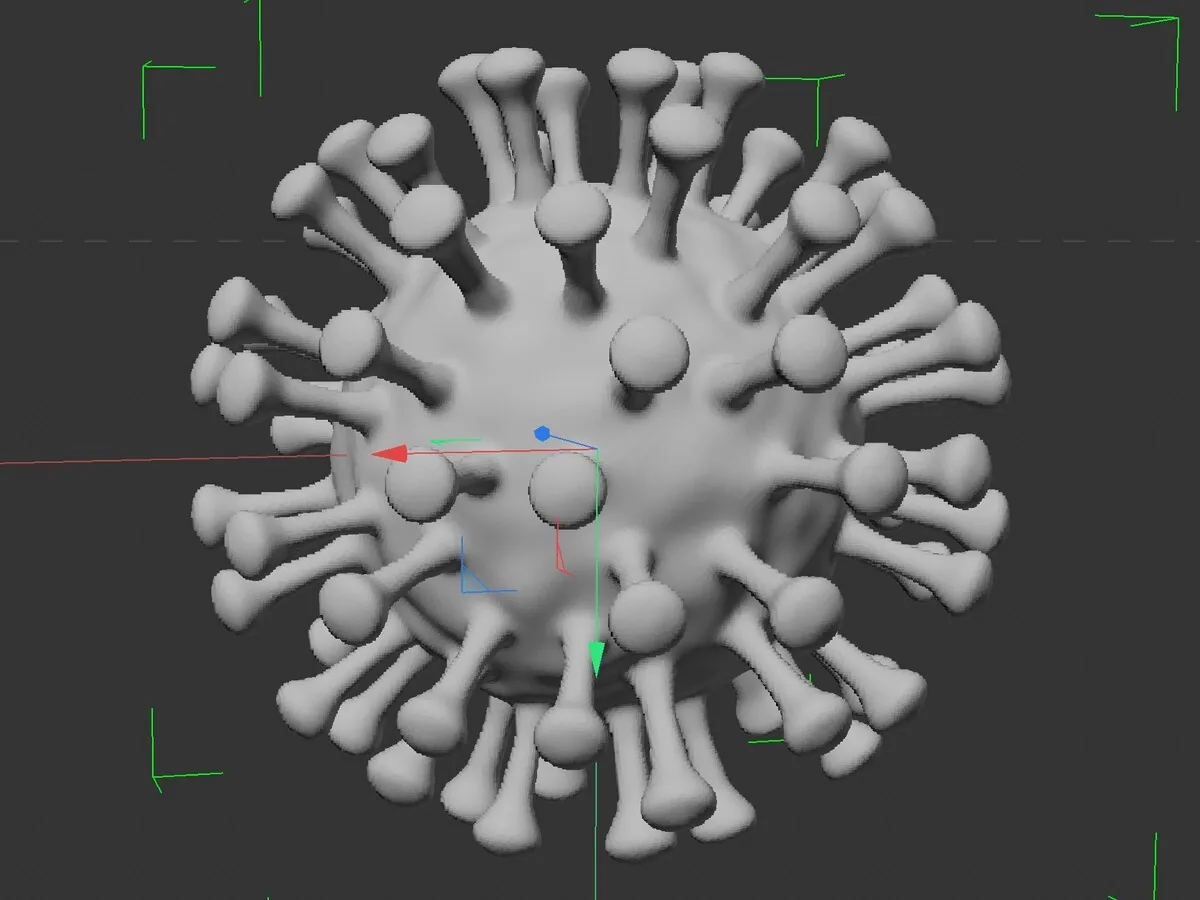
One shape. The virus body is a separate sphere with a Displacer for irregularities. Volume Builder merges the body and the spikes into one continuous surface with smooth transitions, and Volume Mesher turns it into a mesh.
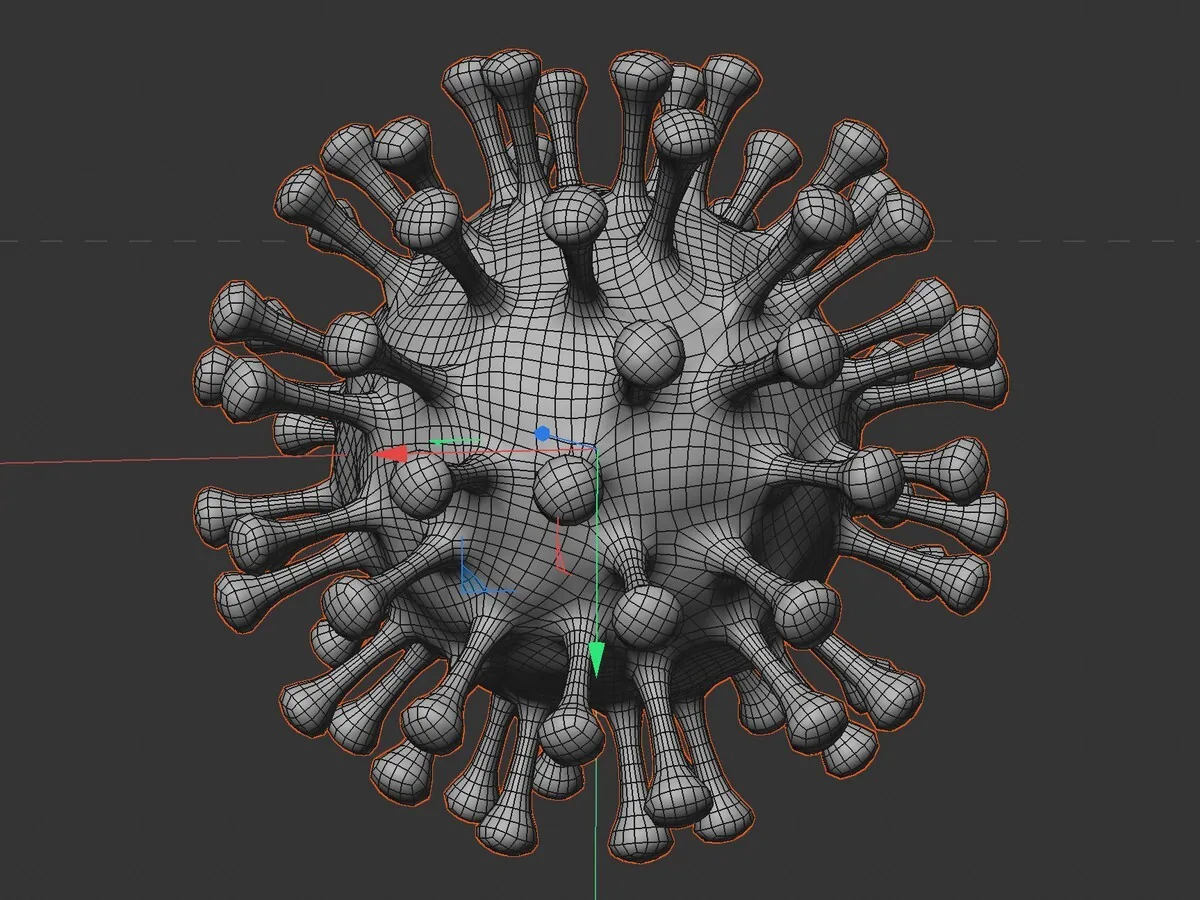
Clean mesh. Remesh rebuilds the mesh into even quads. Another animated Displacer works on top, so the surface of the virus slowly “breathes”.
Procedural .c4d project
The working file with the live procedural setup can be bought separately:
The working file with the live procedural setup can be bought separately:
- change the sphere segments, and the number of spikes changes;
- change the cylinder shape, and all spikes change at once;
- adjust Voxel Size and Mesh Density to get the level of detail and polycount you need.
Buy the procedural project
UV UNWRAP
The UVs are non-overlapping. The virus body is laid out in large islands, each spike has its own, and together they evenly fill the 0–1 square. Thanks to this, baked textures sit without stretching or visible seams, and texel density is the same across the whole surface, including the thin spike stems. If you want to recolor the model or paint your own texture, the UVs are ready for it.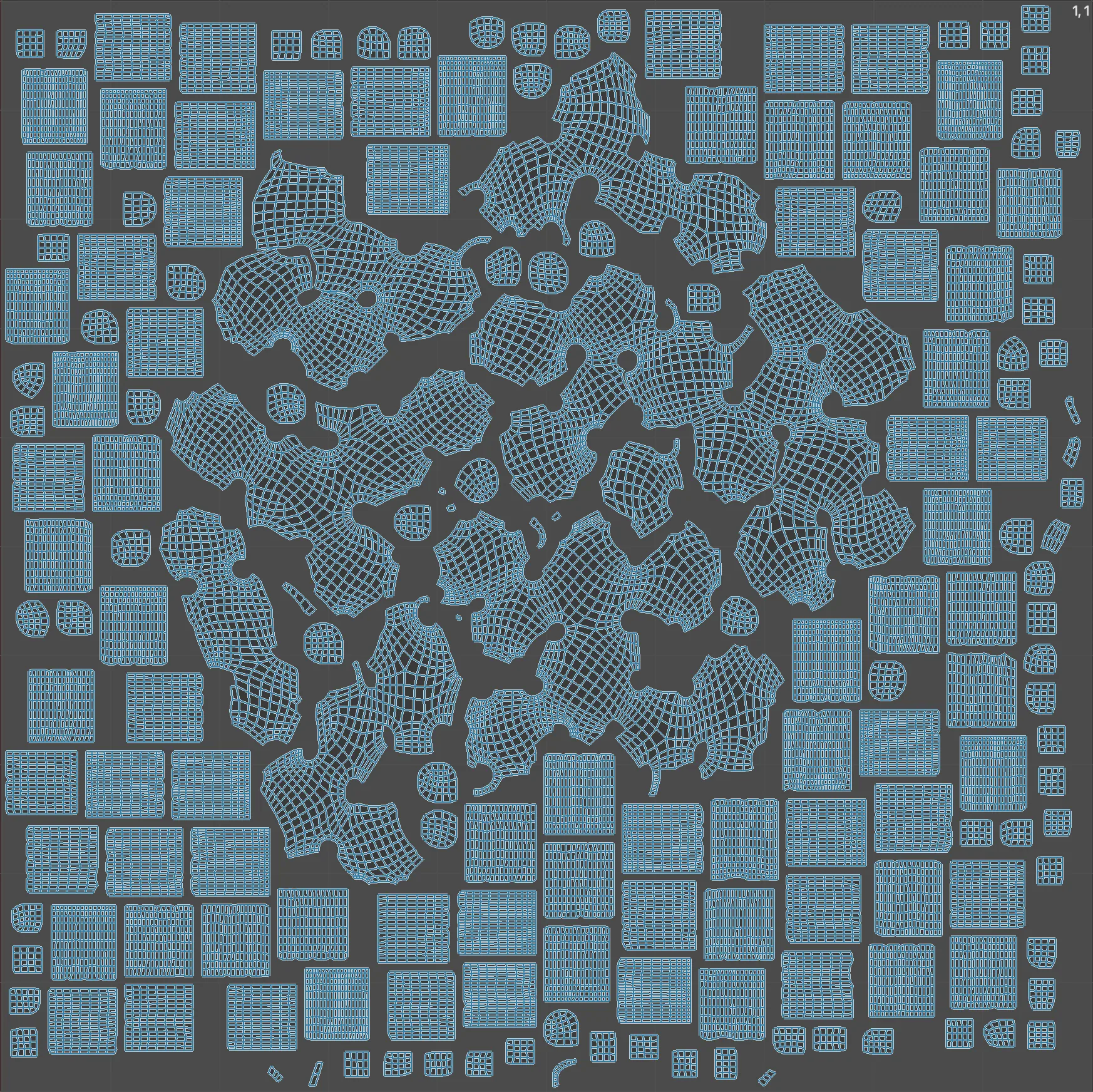
The archive contains two versions for different tasks.
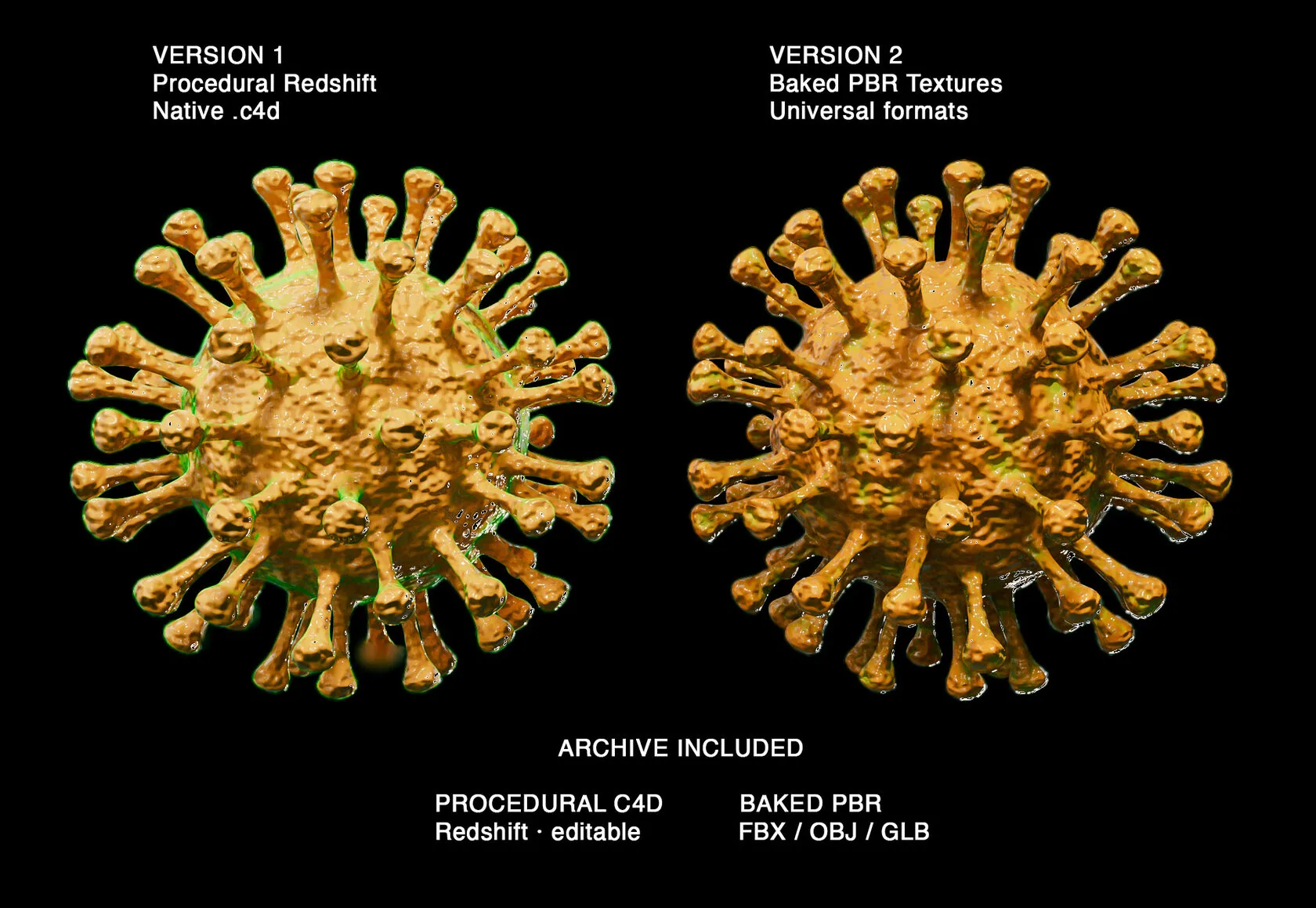
Version 1 — procedural Redshift material. Relief and color are generated by noise nodes, with no image textures. Noise scale and type, color and bump strength can be edited in a couple of clicks, and the surface is animated with a Displacer deformer, so the shell slowly “breathes”. This version is for those who work in Cinema 4D and want to tailor the virus to their video.
Version 2 — baked PBR textures. The procedural setup is baked into Base Color, Ambient Occlusion and Bump maps. The material is already assembled and renders right after opening. The model is exported to OBJ (+ MTL) and FBX, so it opens in Blender, Maya, 3ds Max, Unreal Engine, Unity and other 3D software. Textures come as separate files and the node setup diagram is included, so the material is easy to rebuild in any render engine: Cycles, V-Ray, Octane, Arnold.
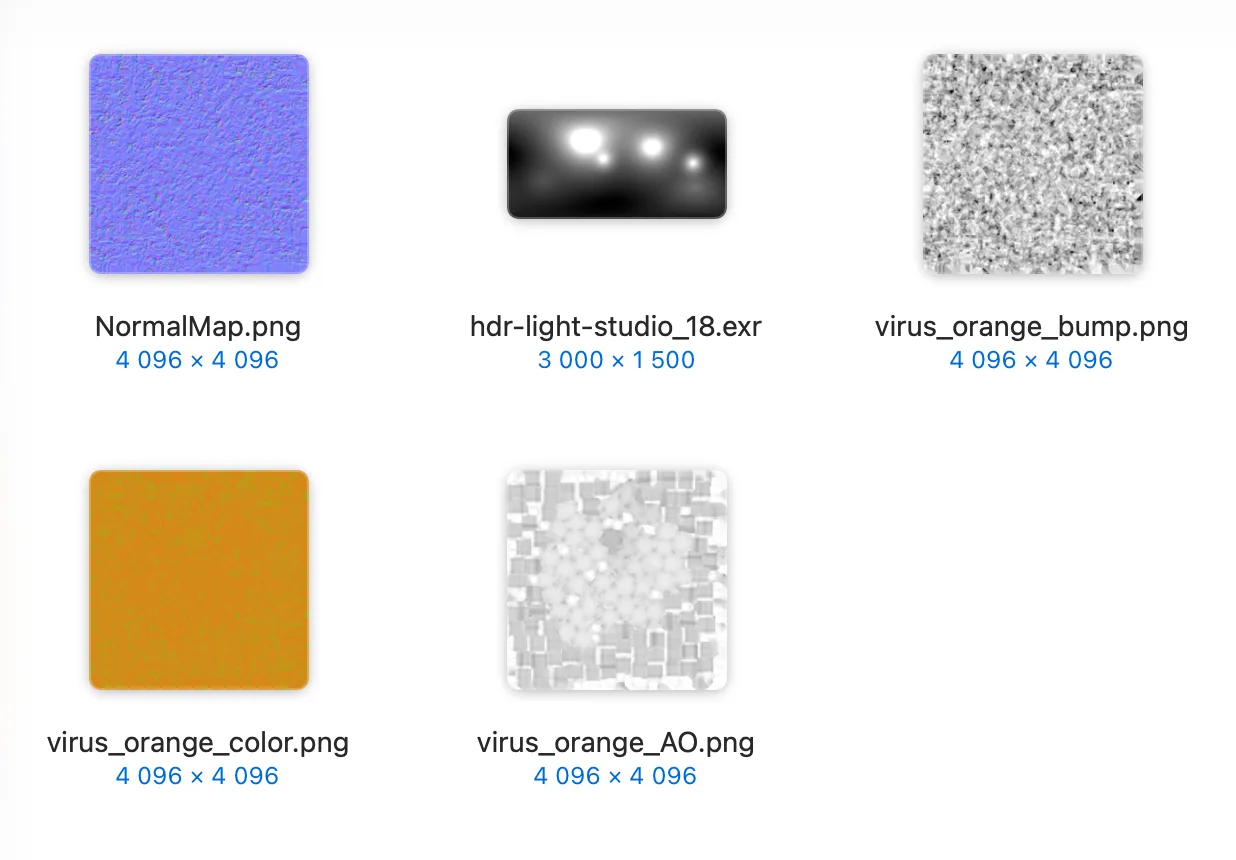
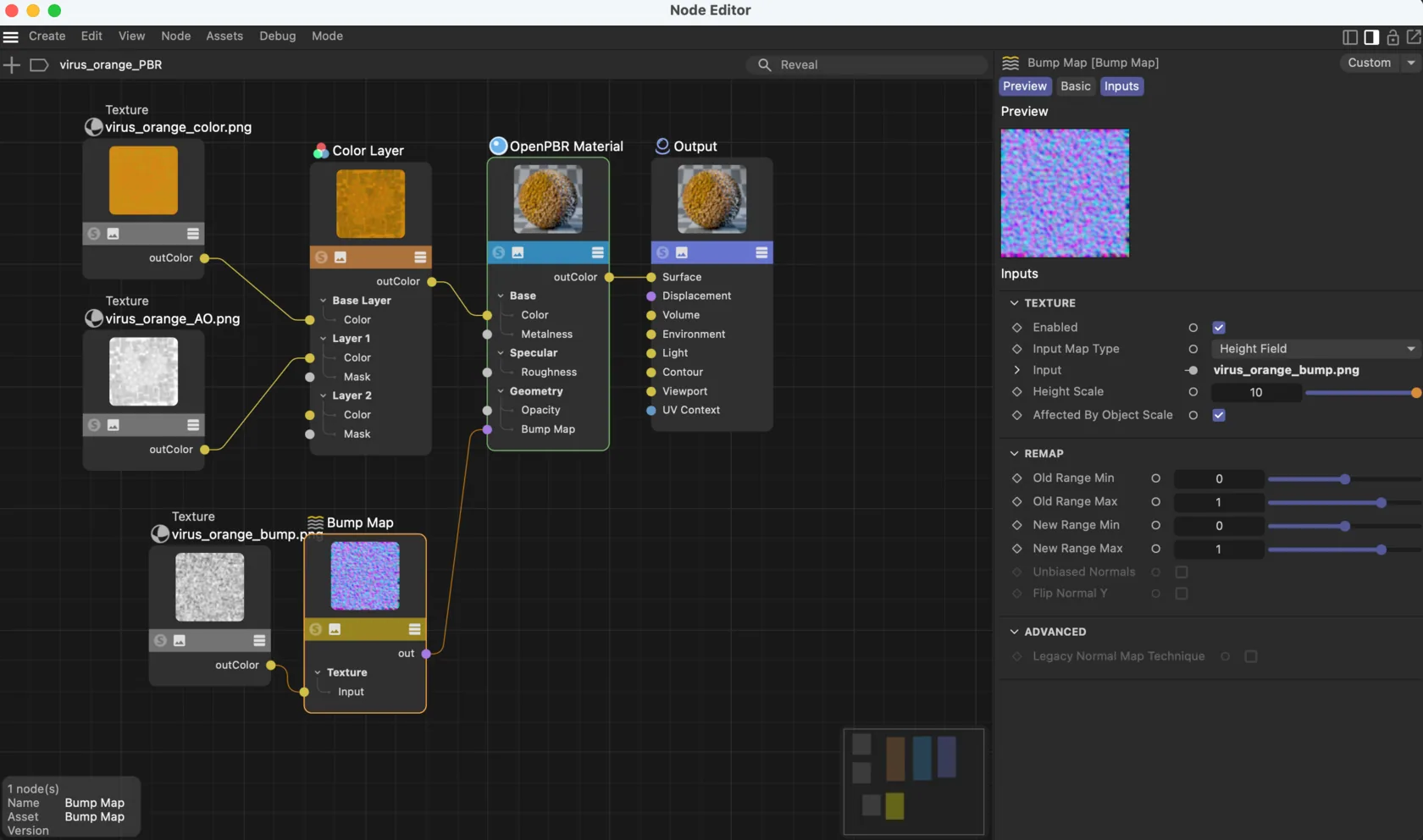
OpenPBR material: the color map is mixed with AO via Color Layer, and the relief map is connected through Bump Map in Height Field mode. Node setup:
The archive includes
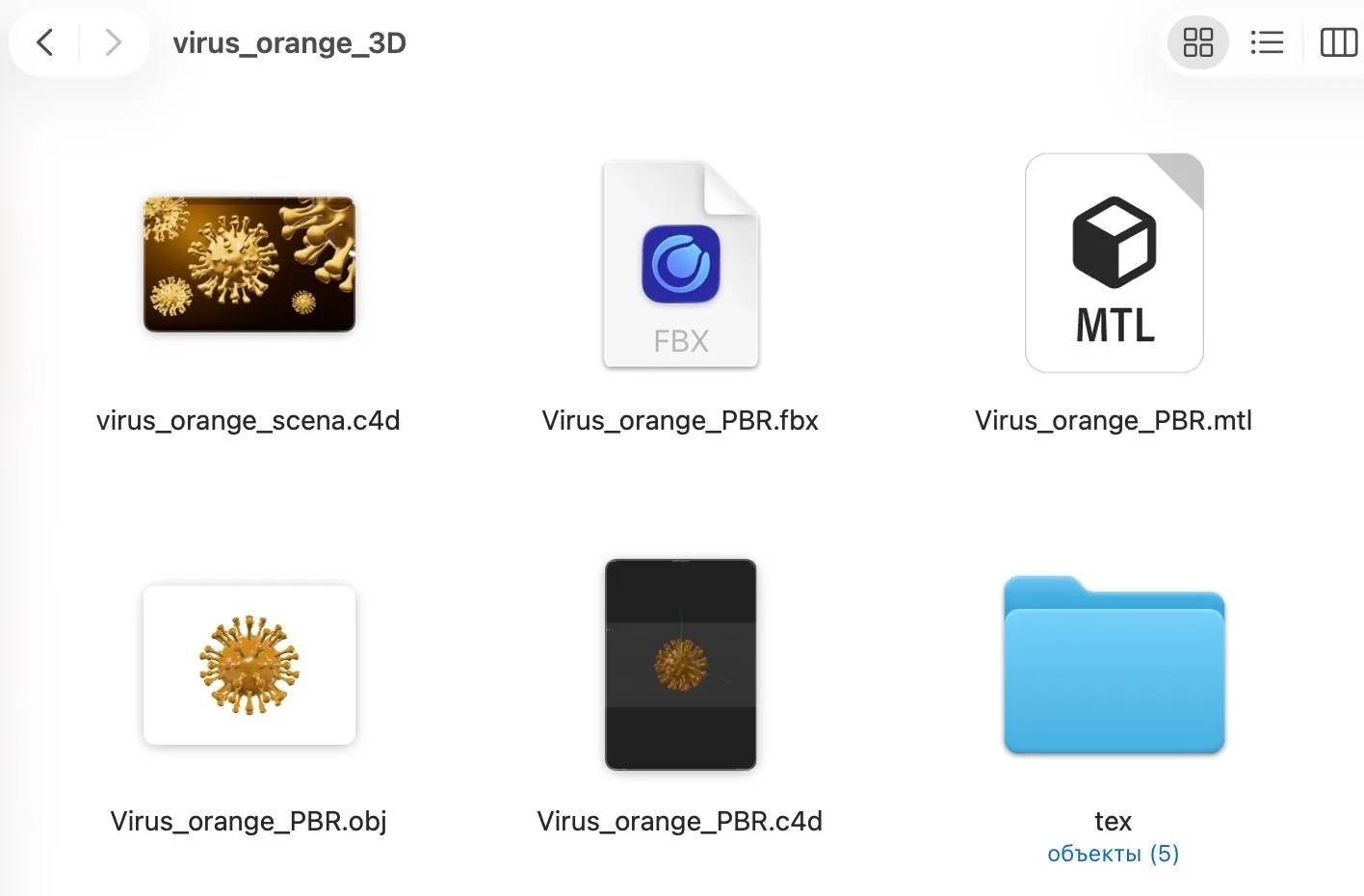
- animated .c4d scene with a procedural Redshift material
- static .c4d model with baked PBR textures
- the model in .obj (+ .mtl) and .fbx formats
- Base Color, AO and Bump textures plus a node setup diagram